Pilot Simulator: Airplane Game
- 4.7
- Rating
- 10.00M
- Installs
- Free
- Price
 Analysis by App-foxy
I approached Pilot Simulator: Airplane Game expecting a straightforward way to spend a few spare minutes with aircraft rather than a full aviation training tool. That expectation matters, because this is a free simulation game from GamePark aimed at people who enjoy plane games and want a more accessible pilot-themed experience. After spending time with it, I found its strongest quality is immediate approachability: it gives the fantasy of taking control without demanding that every session feel like homework.
The game sits in the simulation category and carries a Teen content rating. It was released on October 19, 2022, and the current version is 1.5.1, with support beginning at Android 7.1. That makes it suitable for a broad range of Android devices, including phones that are no longer new. Its popularity is also easy to understand: it has passed 10 million installs, with an average rating of 4.6 from around 142 thousand ratings. Those figures suggest that the basic idea connects with a large audience, although popularity alone does not guarantee that it will remain interesting after the first few sessions.
From the first flight to a lasting routine
I found the first flights most useful as a chance to learn whether the game’s pace and piloting feel suit me, rather than as a test of how long I can keep playing. That makes it easier to decide if it belongs in my regular rotation or is better saved for occasional breaks. From there, the real question is how that first curiosity can turn into a comfortable routine.
You May Also Like

 Blood Strike: 2.5 Anniversary
Blood Strike’s Loadouts Turn Every Drop Into a Tactical Gamble
A close look at Blood Strike’s custom loadouts: how fast access to signature weapons reshapes its battle royale rhythm, rewards preparation, and narrows the gap between fights.

 Pandora - Music & Podcasts
Pandora’s Music Is Easy to Start, but Harder to Recover
Pandora’s strength is its low-effort path from a seed to a station. Its weak spot is how much confidence it asks you to place in connection, setup, and quiet recovery.

 8 Ball Pool
 Is Built on Rivalries, Rematches, and Routine
A close look at the rivalries, rematches, shared routines, and unanswered safety questions that turn a quick pool match into a persistent mobile community.

 Samsung Music
’s Quiet Strength Is Playing What You Already Own
Its reach comes less from spectacle than from dependable access to a personal library. That simplicity is both the app’s strongest retention engine and its ceiling.

 AccuWeather: Weather Radar
AccuWeather Review: A Quick, Clear Forecast for Everyday Decisions
For everyday plans, the best forecast is the one you can understand quickly. AccuWeather makes rain timing, radar, and local conditions easy to act on, with a few trade-offs.

 Hill Climb Racing
Why Hill Climb Racing Still Turns Crashes Into One More Run
A tiny car, a bumpy hill and one more upgrade: Hill Climb Racing keeps resurfacing because its simple chaos makes every near-miss feel personal.
More From Our News Desk



The first week is built around quick discovery
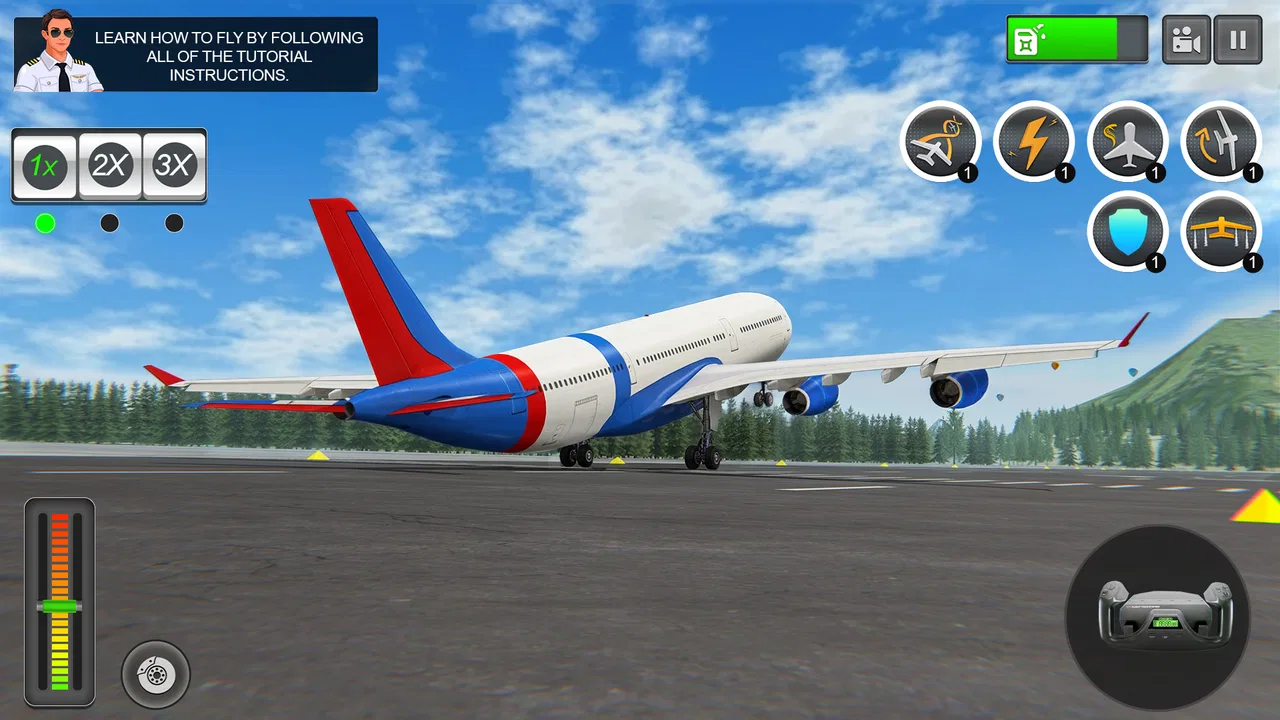
What worked for me during the first week was the low barrier to entry. I could pick it up with the mindset of playing a game, not studying an aircraft manual. That distinction separates it from more demanding flight simulator alternatives, where the learning curve can become the main event. Here, the appeal comes from getting into the pilot role quickly and seeing whether the controls and presentation keep me engaged.
The first sessions are naturally driven by curiosity. I wanted to understand how the game handles, how much attention it expects from me, and whether short play periods feel worthwhile. This is the kind of title that fits a waiting room, a commute when I am seated, or a quiet break at home. I would not open it expecting a complete replacement for a serious desktop simulator, but I would open it when I wanted an aviation-flavored activity that did not require a long setup.
One useful way to approach the opening hours is to resist rushing. Instead of treating every moment as a test of speed, I found it more enjoyable to use the early playtime to learn the rhythm of the controls. Small corrections are generally more useful than dramatic movements in any piloting game, and that habit helps here too. Even when the experience is designed for casual play, being deliberate makes the result feel less random.
That gives the first week a modest but real learning curve. I began by reacting to what was happening, then gradually started anticipating the next adjustment. This is one of the better reasons to try it: the game can provide a gentle introduction to the idea that flying is about managing several small decisions rather than constantly making large ones.
Who will enjoy the opening hours
I think the best early audience is someone who likes aircraft, wants a game rather than a technical lesson, and is comfortable with a simplified interpretation of piloting. It also suits players who prefer self-contained sessions. You do not need to reserve an entire evening to get something from it, which gives it an advantage over heavier simulation games that can feel inconvenient on a phone.
It is less convincing for a player whose main goal is realism above everything else. If you want detailed procedures, highly technical aircraft behavior, or the feeling of operating a professional cockpit, an established simulator with deeper systems will probably be a better choice. This game’s value is in the accessible fantasy of flying, not in replacing formal instruction or a specialist simulation setup.
Parents and younger players should also pay attention to the Teen rating rather than assuming that every airplane game is automatically suitable for children. The rating is a practical part of deciding whether it belongs on a shared family device. For an adult or older teenager who already enjoys simulation games, the rating is unlikely to be an obstacle, but it should still be considered before recommending it to someone younger.
Why the novelty can last longer than expected
The first-week novelty does not come only from seeing an aircraft on screen. It comes from adopting a different mindset for a few minutes. Even a simple flight scenario can feel satisfying when I stop treating it as a reflex game and start treating it as a sequence of choices. That change in attitude is a concrete tip for getting more from the game: play with a calm, controlled approach instead of trying to force constant excitement.
Another helpful habit is to judge a session by how well it holds my attention, not only by whether I complete it perfectly. This matters because mobile simulation games can become frustrating when every attempt is treated as a pass-or-fail verdict. A relaxed session lets me notice which parts I enjoy and which parts begin to feel repetitive. That information becomes important after the initial excitement fades.
What happens after the first month
The harder question is not whether the game can entertain me during the first week. It is whether it earns a regular place on my phone after the basic surprise has disappeared. In my experience, its recurring value depends on how much I enjoy repeating the central piloting routine. If the simple act of taking control remains satisfying, I can return for short sessions without needing a major new reason each time.
This is where the game differs from a large, content-heavy alternative. A more complex simulator may offer deeper progression, broader aircraft selection, or more detailed operations, but it can also demand more time and concentration. Pilot Simulator: Airplane Game has a more casual identity, so its month-to-month role is closer to a reliable pastime than a hobby that takes over my schedule.
For everyday use, I would keep it as a “short session” game. For example, if I have fifteen quiet minutes after dinner, I can play a flight-focused game without committing to a long campaign or multiplayer appointment. That makes it useful for filling gaps in the day. The trade-off is that the same convenience can expose repetition sooner: a compact experience has fewer places to hide when the central activity stops feeling fresh.
My advice is to avoid forcing a daily routine. If I play it every day simply because it is installed, the familiar loop can become work. If I return when I genuinely want an aircraft-themed break, the game has a better chance of retaining its appeal. Its long-term strength is flexible access, not endless novelty.
Comparing it with the usual alternatives
Against arcade-style flying games, this title is appealing when I want the language and mood of simulation rather than constant action. It encourages me to think about piloting, even if the experience remains approachable. Against serious flight simulators, however, it gives up depth in exchange for convenience. That is not automatically a weakness; it is a choice that determines who should install it.
A technical simulator is better for someone who enjoys procedures, detailed controls, and long sessions devoted to mastering a system. A purely arcade game is better for someone who wants immediate speed, spectacle, and minimal attention to controlled flying. This game sits between those two points. I would recommend it to a player who finds arcade flight games too shallow but finds professional-style simulators too demanding.
That middle position also explains why the 4.6 average is understandable without making the game perfect for everyone. A broad audience can appreciate an easy entry point, while dedicated simulation fans may judge it against much more demanding standards. The right comparison is therefore not “Is this the most realistic airplane game?” but “Does this give me enough piloting flavor for the amount of time and effort I want to spend?”
The maintenance burden is pleasantly small
From a practical perspective, the game is easy to justify because it is free. I do not have to make a purchase decision before discovering whether the handling and pacing suit me. That lowers the risk for curious players, especially people who are only beginning to explore airplane games. The free entry also makes it easier to leave the game installed as an occasional option rather than demanding that every session prove its financial value.
The current version, 1.5.1, is the version I would look for when deciding whether to start using it now. The minimum operating-system requirement of Android 7.1 is also relatively accommodating for Android users with older hardware. Still, compatibility should not be confused with identical performance on every phone. A newer device may provide a more comfortable experience than an older one, particularly if the phone already struggles with other games.
My maintenance advice is simple: keep enough free storage for ordinary phone operation, close demanding background apps if performance feels uneven, and update through the normal app channel when an update is offered. These are not special requirements, but they can make a noticeable difference with any mobile game. I would also avoid judging the title after one distracted session; simulation games often feel better once I have learned the control rhythm.
The main maintenance burden is not technical. It is motivational. There is no point keeping a game installed if I repeatedly open it out of habit and close it because the same activity no longer interests me. I would give it a week of occasional sessions, then decide whether it still provides a distinct kind of relaxation. That is a better test than relying on install count or store popularity.
Where fatigue begins
The most likely source of fatigue is repetition in the central flight experience. Once the basic sensation of piloting becomes familiar, I need meaningful variation or a personal goal to keep returning. If I am not interested in improving my control, exploring the available situations, or simply enjoying the aircraft theme, the game can start to feel like a task repeated for its own sake.
This is also where expectations can cause disappointment. Someone downloading it after playing a highly detailed simulator may notice the simplified nature of the experience immediately. Someone coming from a fast arcade title may instead find the pace too restrained. Neither reaction means the game fails; it means the player wanted a different point on the simulation spectrum.
Another possible friction point is the gap between a good first impression and a durable habit. The idea of piloting is attractive, but an idea alone cannot guarantee months of engagement. I would be cautious about installing it as my only mobile game. It works better as part of a small rotation, alongside something with a different pace, so that the airplane theme remains enjoyable instead of becoming repetitive background activity.
There is a useful trade-off here. The same simplicity that lets me start playing quickly also limits how much there is to master. Players who value convenience will see that as a benefit. Players who measure value by complexity may see it as the main limitation. Before installing, I would decide which side matters more to me.
Three ways I would use it more effectively
First, I would play in focused bursts rather than leaving it open while multitasking. A short, attentive session makes the piloting theme more satisfying and helps me notice whether I am actually enjoying the controls. This is especially useful on a phone, where interruptions can make any simulation feel less coherent.
Second, I would use the early sessions to develop consistency instead of chasing dramatic results. Smooth inputs and patience are better tests of whether the game suits me than hurried attempts. This approach also reveals an important personal trade-off: if I enjoy gradual control improvement, I may keep returning; if I need constant new content, the appeal may fade faster.
Third, I would treat the game as a mood-based choice. It is a good fit when I want a calm aviation theme and a manageable activity. It is a poor fit when I am looking for social competition, a story-led adventure, or a deep technical study of aircraft. Matching the game to the moment prevents me from blaming it for not being a different genre.
Who should install it, and who should skip it
I would recommend it to casual aviation fans, Android users with compatible older devices, and players who want a free simulation game that can be sampled without a purchase. It is also worth trying if traditional flight simulators look intimidating but arcade flying games feel too disconnected from the idea of piloting.
I would skip it if my priority is professional realism, extensive technical detail, or a long-term progression system that must remain surprising for months. I would also skip it if I dislike repeating a central activity, because that is the part most likely to determine whether the game survives on my phone after the first burst of curiosity.
The audience size is notable: more than 10 million installs show that the concept has broad reach, while the Teen rating sets a clear boundary for younger users. Those details do not replace personal testing, but they help frame the decision. This is a widely tried, free mobile game with a specific aviation focus, not a niche technical tool.
My long-term verdict
After the novelty fades, I see Pilot Simulator: Airplane Game as a dependable occasional game rather than an automatic permanent installation. Its lasting value comes from accessibility, a clear pilot fantasy, and the ability to fit into short breaks. I appreciate that I can approach it casually without giving up the feeling that I am doing more than tapping through a generic action game.
At the same time, I would not promise endless variety to a friend. The experience has to earn repeat visits through my own interest in controlled flying. If that interest is present, the game can become a comfortable part of a mobile rotation. If I need constant progression or increasingly complex systems, a deeper alternative will serve me better.
GamePark has made a sensible choice by keeping the entry point broad, and the strong average rating from around 142 thousand ratings reflects why many players find that approach appealing. My final recommendation is to try it with modest expectations: think of it as an accessible airplane simulation for regular short sessions, not as a complete aviation simulator. It earns lasting space when you enjoy the act of piloting itself; otherwise, its first-week appeal may be its strongest feature.
FAQs for Pilot Simulator: Airplane Game
01What is Pilot Simulator: Airplane Game about?
Pilot Simulator: Airplane Game is a mobile aviation game focused on flying different aircraft through a variety of missions and environments. Players generally take off, control altitude, follow routes, complete landing challenges, and manage aircraft movement. It is designed for casual players who want an accessible flight experience rather than a fully realistic professional simulator, although the difficulty can increase as new objectives and aircraft become available.
02Is Pilot Simulator: Airplane Game suitable for beginners?
Yes, the game is generally suitable for beginners because its controls are designed to be understandable on a touchscreen. New players can learn the basic functions, such as steering, changing altitude, accelerating, and landing, through practice and early missions. However, precise landings and more demanding flight objectives may require patience. Players who are unfamiliar with flight games should begin slowly and avoid rushing through the tutorial or introductory levels.
03Can I play Pilot Simulator: Airplane Game offline?
Offline availability may depend on the specific version of the game and the features being used. Basic gameplay can sometimes work without a constant internet connection, but advertisements, updates, cloud-related functions, or certain online content may require access to the internet. Before traveling or playing without mobile data, it is recommended to launch the game once while connected and verify which missions and features remain available offline.
04Does Pilot Simulator: Airplane Game contain ads or in-app purchases?
Like many free-to-download mobile games, Pilot Simulator: Airplane Game may include advertising and optional purchases. Ads can appear between missions or when players request rewards, while purchases may be offered for removing advertisements, unlocking aircraft, obtaining currency, or progressing more quickly. The game can usually be explored without spending money, but users should review the store listing and device purchase settings, especially if children will be playing.
05What devices are required to run Pilot Simulator: Airplane Game smoothly?
The game should run on many relatively modern Android and iOS devices, but performance can vary depending on the phone or tablet’s processor, available memory, operating-system version, and free storage. Older devices may experience slower loading, reduced visual quality, or occasional stuttering, particularly during detailed scenes. For the best experience, keep the app updated, close unnecessary background applications, and maintain enough storage for future updates and cached game data.
Pros
- Simple controls make flying accessible for beginners.
- Multiple aircraft provide variety as you progress.
- Short missions fit well into quick gaming sessions.
- Takeoff and landing challenges add satisfying variety.
- Playable offline in many situations without an internet connection.
Cons
- Frequent ads can interrupt gameplay between missions.
- Some aircraft and upgrades require substantial grinding.
- Flight physics feel more arcade-like than realistic.
- Limited scenery may make longer sessions feel repetitive.
- Touch controls can be imprecise during difficult landings.

Pilot Simulator: Airplane Game
Gallery